Loading question...
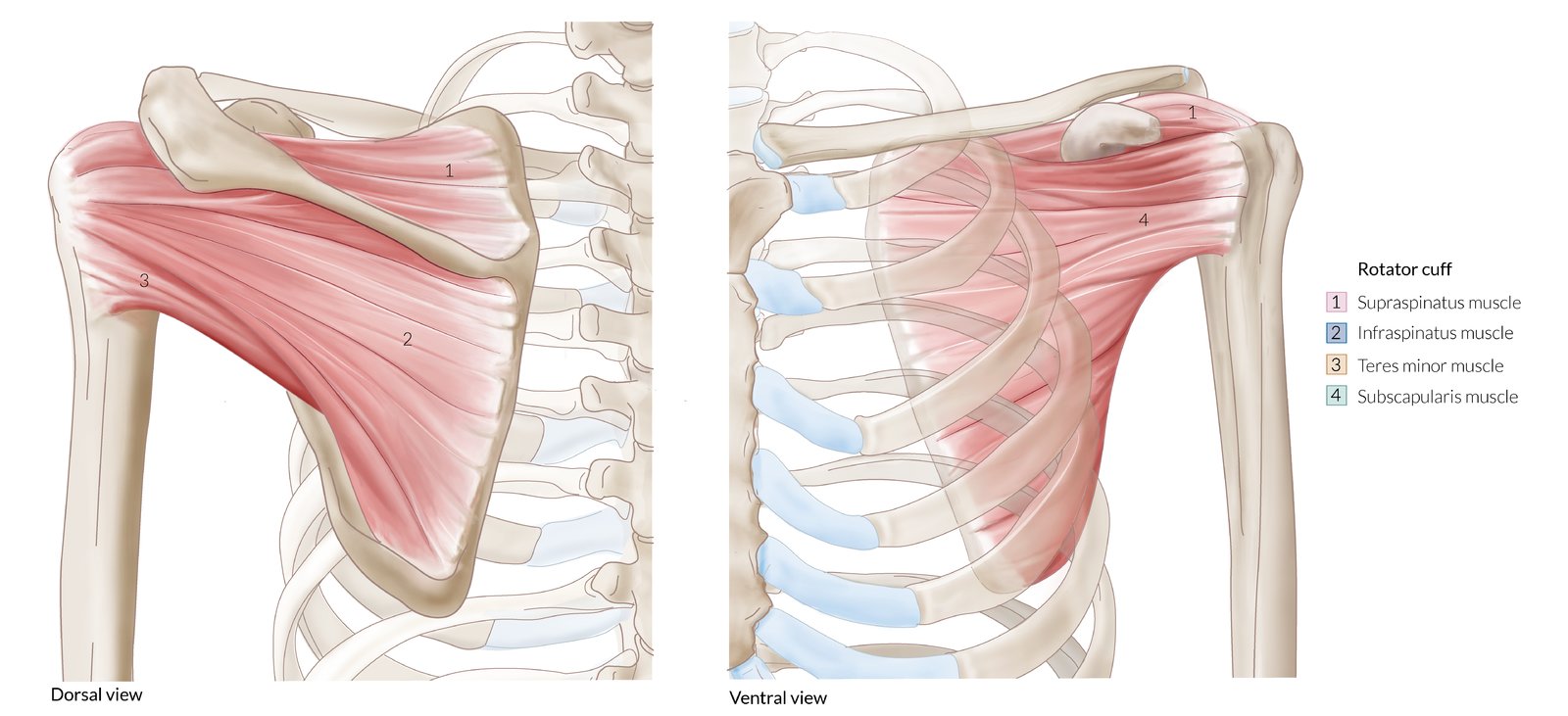
| Muscle | Origin on scapula | Attachment on humerus | Function on arm | Innervation |
|---|---|---|---|---|
| Supraspinatus | Supraspinous fossa of scapula | Superior aspect of greater tubercle | Abduction (primarily <15°) | Suprascapular nerve (C4-C6) |
| Infraspinatus | Infraspinous fossa of scapula | Posterolateral aspect of greater tubercle | External rotation | Suprascapular nerve (C4-C6) |
| Teres minor | Lateral border of scapula | Posterolateral aspect of greater tubercle | Adduction & external rotation | Axillary nerve (C5-C6) |
| Subscapularis | Subscapular fossa of scapula | Lesser tubercle | Adduction & internal rotation | Upper & lower subscapular nerve (C5-C6) |
The SITS Mnemonic
Remember the four muscles using the acronym SITS:
* Supraspinatus
* Infraspinatus
* Teres minor
* Subscapularis
Attachment Tip
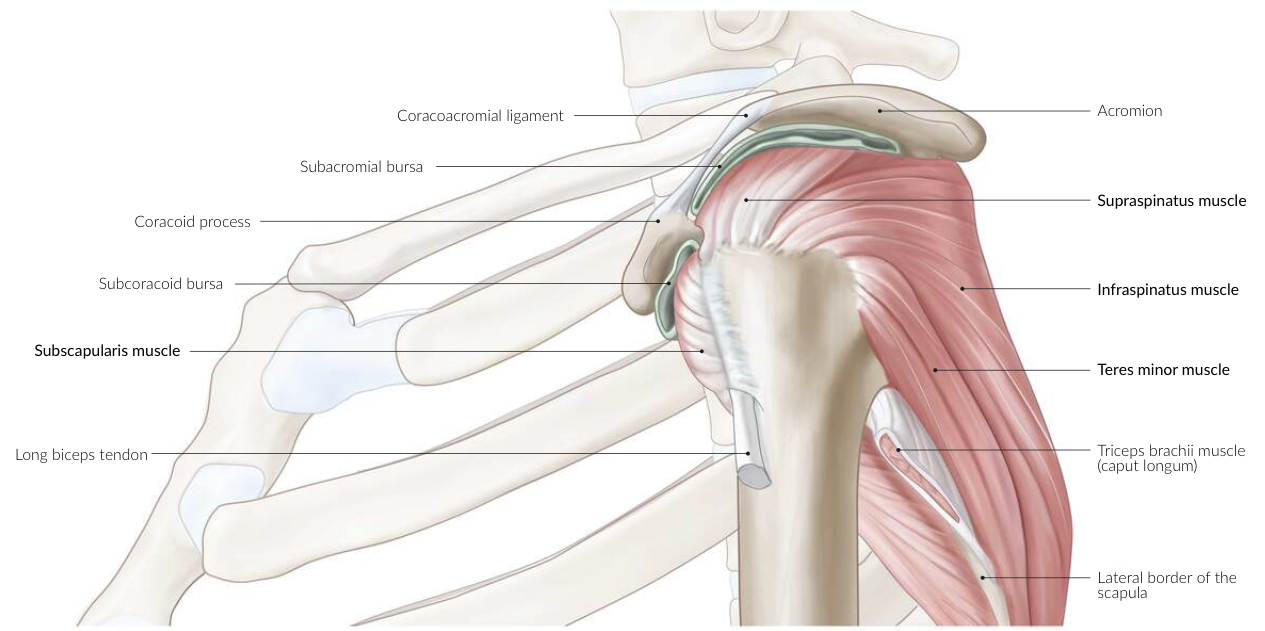
* The first three muscles (S I T) all attach to the greater tubercle of the humerus.
* The Subscapularis is the odd one out; it attaches anteriorly to the lesser tubercle.
Functional Breakdown
* Supraspinatus: Initiates abduction (the first 15 degrees). It is the most commonly torn rotator cuff muscle, often assessed using the "empty can" test.
* Infraspinatus: The primary external rotator. Frequently injured in throwing athletes (pitching injuries).
* Teres Minor: Assists with external rotation and adduction. Remember that it shares its innervation (Axillary nerve) with the deltoid muscle.
* Subscapularis: The only muscle of the group that performs internal rotation.